
The Five Pillars of Growth After Loss™
Research-based strategies to help you care for yourself and make everyday life a little more manageable—in ways that fit your needs.
Life after loss can ask a lot of you—from caring for yourself to managing work, relationships, and everyday responsibilities. Your own needs can be difficult to recognize or make time for.
The Five Pillars framework brings together scientific literature on adapting to life after loss, with post-traumatic growth research as its foundation. It explains why a strategy may be useful and offers small, practical steps to help you try it, decide whether it fits, and adapt it to your circumstances.
Understanding The Five Pillars
For more than 30 years, post-traumatic growth research, pioneered by Dr. Richard G. Tedeschi and Dr. Lawrence G. Calhoun, has explored how people can experience meaningful change after profoundly challenging life events.
The Five Pillars™ draws on this research, scientific literature on adapting after loss, and Dr. Mari’s own research through Grand Canyon University—offering practical strategies and small daily steps you can explore and adapt to your life.
Pillar 1: Preservation
Change starts with you.
What it is:
Your brain and body are spending a huge amount of energy learning to live in a world without your person. It is easy to end up depleted. When you tend to the person behind the grief, you can begin to build back your capacity and stop running on empty.
Preservation protects the basics that keep you going: sleep, food, movement, time outside. It also covers your non-negotiables, the limits and small rituals that protect you when grief takes more than you have. This pillar focuses on caring for you, especially when your own needs have been set aside while caring for others.
You might start here if:
- ✓ Sleep and meals are the first things to go when you have a lot on your plate
- ✓ You say yes to everything or try to meet everyone's expectations, then have nothing left
- ✓ You feel unsettled and aren’t sure what you need
- ✓ You’re not sure what would help you feel supported on birthdays, anniversaries, or other meaningful days
Pillar 2: Regulation
Find out what your unique type needs.
What it is:
It's easy to assume that there's one right way to cope. But people are different. Drawing on research into temperament and brain chemistry, Dr. Mari helps you understand your own patterns to know your needs better. When your practices are more aligned with your preferences, patterns, and circumstances they're easier to keep, and can be more effective.
Regulation is about finding what helps you feel a little more steady when a day or moment becomes overwhelming. You can explore different ways to pause, take a break, or find comfort—and choose what works for you.
You might start here if:
- ✓ Other people’s suggestions haven’t felt right for you
- ✓ A difficult moment makes it hard to get back to your day
- ✓ You feel guilty that you grieve differently than others in your family
- ✓ Your body feels on high alert, even when nothing is happening
Pillar 3: Anchoring
Finding grounding in life and connection through love.
What it is:
Grief often comes with a question of what matters now. An anchor gives you something to lean on, whether that's faith, spirituality, science, or the values your person taught you.
Anchoring is about finding steady ground: noticing where your energy is leaking, naming what still matters, and keeping a healthy bond with the person you lost.
Research on continuing bonds suggests that staying connected to someone who has died can bring comfort, distress, or both. This pillar helps you explore what feels supportive—including ways to carry their love forward that fit your life, without expectations about how you should remember or stay connected.
You might start here if:
- ✓ Certain people, tasks, or commitments take more energy than you have to give
- ✓ You’re questioning beliefs or struggling to find something you can lean on
- ✓ You’re unsure what matters to you now or what gives your days meaning
- ✓ You’d like to explore meaningful ways to carry your loved one’s love and values into everyday life
Pillar 4: Agency
Advocating for yourself.
What it is:
After loss, it's easy to lose your voice. Other people decide how the holidays will go, what you should feel, and how fast you should be "okay." When others around you are grieving, too, your needs can get lost. Agency is how you get your voice back.
This Pillar is about learning to advocate for yourself, relearning how to live life with this experience, and taking better care of your needs in the world. Then, slowly, you can discover who you're going to be now, with this loss as a part of your story.
You might start here if:
- ✓ Other people’s expectations leave little room for what you need
- ✓ You agree to things you don’t want or have the energy for
- ✓ You make room for everyone else’s needs but struggle to express your own
- ✓ You’re figuring out who you are now and what you want for yourself
Pillar 5: Connection
You were never meant to carry this alone.
What it is:
Loss can quietly isolate you. Friends stop asking. People change the subject when you mention your person. Traditional therapies and grief supports don't often offer a plan for lifelong integration.
Connection rebuilds the relationships that help you carry loss: with yourself, with the people closest to you, and with others who've lived it too. For parents and partners, it includes how to talk with your spouse and your children about the person who died.
You might start here if:
- ✓ People ask how you’re doing less often, and you’re unsure how to let them know what you need
- ✓ You want to talk about your loved one—with family, friends, or children—but struggle to find the words
- ✓ You miss feeling understood, even when you’re with other people
- ✓ The support you once had has faded, and you’d like people you can turn to now

The Five Pillars in Life, Work, and Parenting
Every loss is unique, and the way we adapt to life after loss will look different for each of us.
The Five Pillars bring together common themes from research on how people care for themselves, find support, and adapt after loss. They offer possibilities to explore—not a set path or a checklist to complete.
Your approach is individual: you can choose what feels relevant, try it in everyday life, and adapt it as your needs change.
Parenting
Work & Daily Life
Relationships & Family
Grief can leave family members feeling disconnected, even when they’re grieving the same person. The Five Pillars™ helps you express your needs, make room for each other’s differences, and stay connected as you remember your loved one.Health & Energy
Build a daily practice with The Five Pillars
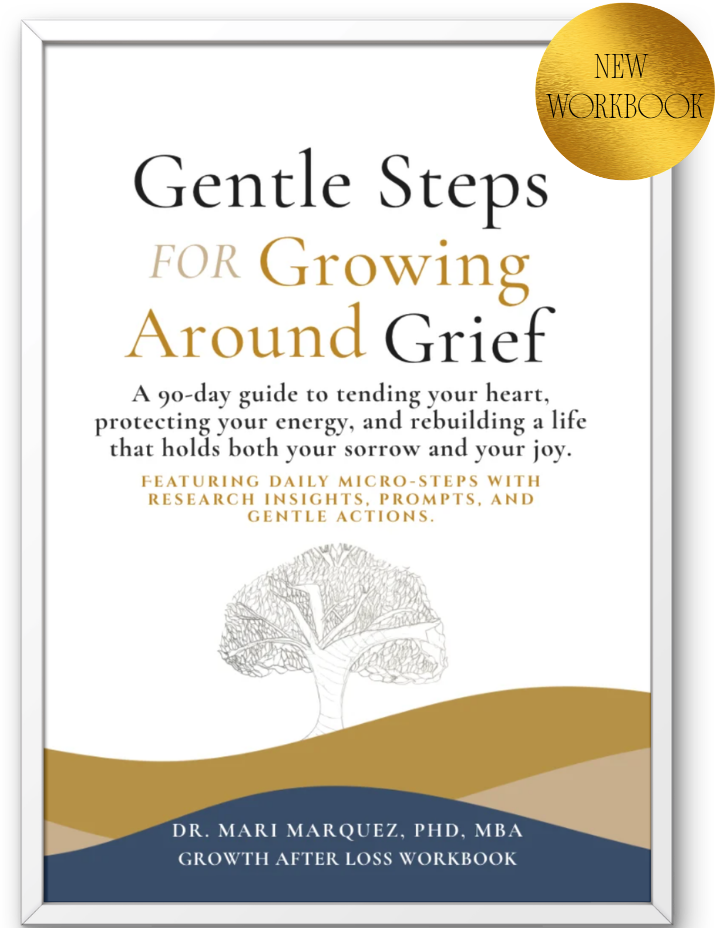
Gentle Steps for Growing Around Grief Workbook
The Workbook helps you walk through The Five Pillars one tiny step at a time. Designed for life after the first year of loss, it guides you through 90 days of gentle practices built on Dr. Mari's research. Each day includes a short journaling prompt, and one simple, practical action, such as sending a text, choosing a starting point, or planning something you can say.

Get Dr. Mari
in Your Inbox
Sign up and get a weekly email with gentle practices and simple steps from Dr. Mari.

Growth After Loss™ is a research-guided framework for rebuilding your life after loss, one small step at a time.
GET STARTEDContact Details